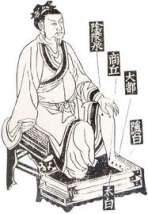
Prof. Yeh Pei-Gong of the Chinese National Research Institute of Traditional Medicine, accompanied by Dr. Yu Youhua, made a presentation on Chinese Traditional Medicine at the International Conference on Alternative Medicine organised by the Canton St. Gallen (1996). Members of the Swiss medical community and international guests were present. Prof. Yeh also did clinical demonstration of the traditional diagnostics in the Chinese Medicine.
Roundtables in Canton Vaud and City of Geneva with local medical community were organised to promote understanding of the Chinese Traditional Medicine.
National Institution Reform: Background – At the request of the Republic of Slovenia, CSEND designed a technical cooperation project to assist that newly independent country in reforming its central government by modernising and strengthening its administration. 2.8 million Swiss francs were contributed by the government of Switzerland and complementary contributions was made by Slovenia. The project resulted in the creation of a National Administrative Academy and an Organisation & Management unit within the Ministry of Interior.
Action Learning and Action Research Based Administrative Reform
Slovenia, formerly part of the Republic of Yugoslavia, began gradually building and strengthening its public administration after becoming independent in 1991. The Swiss-Slovenian bilateral project specifically focused on improving government performance in three core areas: central administration, public services, and training and development of civil servants.
An “action technology” based organisation development (OD) strategy was adopted for this project. Emphases were given to the speed of change and the institutional learning. By adopting an action based learning and change strategy, this Slovene-Swiss project was able to conduct know-how transfer activities and pilot reform projects in tandem over fifteen months period.
Specifically, this project consisted three major components, namely:
creation of new competencies within its central government administration. Two new units were to be set up: the first, to provide consultancy in the area of organisational efficiency improvement, the second, to upgrade the skill level of Slovenia’s senior civil servants.
Training of qualified candidates for staffing these two new units. Individual trainees were responsible to develop a five-year training plan for central government officials and to pilot an action research methodology for governmental reform.
Implementation of pilot projects in strengthening efficiency and effectiveness of specific governmental offices, Ministry and state enterprises.
Institution Development Programm
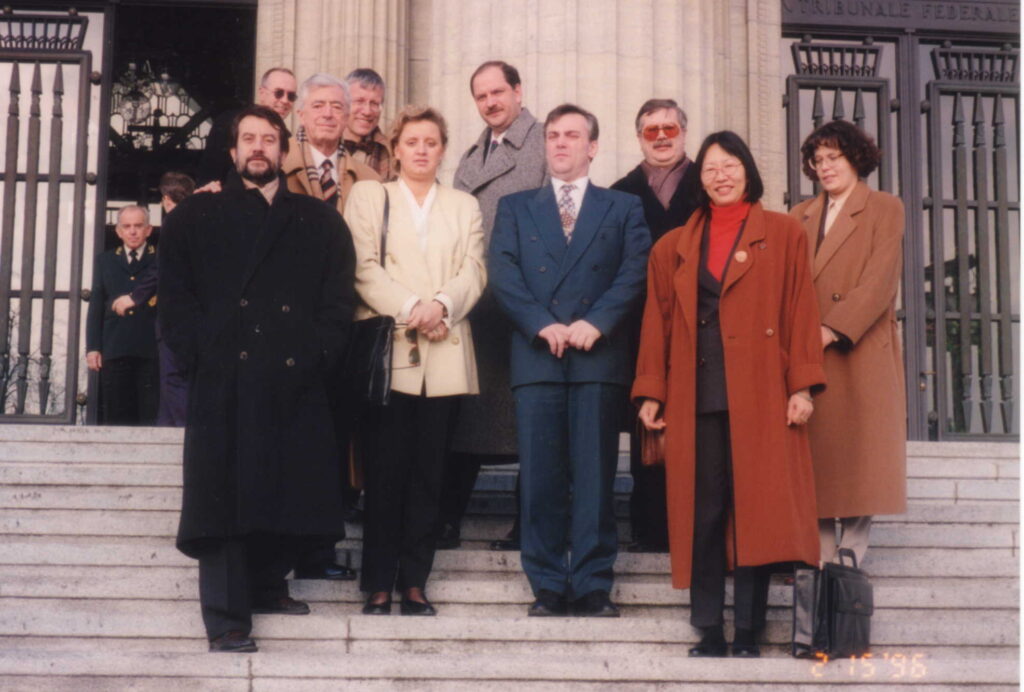
In 1995, 40 Slovenian civil servants from various government departments took part in an 18-month “M.A.S.T.E.R.™” (Managing Administrative Systems through Training, Education and Research) programme to learn modern management and administration methods. An “Action Learning” approach was used in both classroom and workplace settings.
Basic Programme The basic curriculum included the following main subjects:
comparative administrative systems,
theory and methods of organisational development,
financial management,
policy evaluation,
human resource management and development,
personal effectiveness (presentation techniques
public speaking and time management),
working skills (decision-making, planning),
Slovenian administrative systems,
Slovenian law and legislation,
PC literacy (Word for Windows, Excel, graphics) and statistical analysis.
Study Visit to Switzerland
In the following programme phase, the Slovenian trainers traveled to Switzerland for first hand exposure to different management practices and administrative culture. Trainees were given opportunities to established dialogues with different public actors in managing the country and its economy.
Focus of learning during this phase was to achieve a comparative perspective regarding institutional reform/transformation, management development, and human resource development in the public and private institutions.
Institutionalisation
At the end of this project, some of the trainees were retained to form the core staff of the new National Academy of Administration, which perform management development for the entire Slovenian central government, and the O&M unit of the Ministry of Interior. The rest of the trainees returned to their work units with new mandate to function as either internal consultants or as training managers.
Project Results
A report published by CSEND on the process of implementing “Action Learning” in the Slovenian central government is available for use as reference. The following results were produced by the project participants:
Improved procedures for selecting and financing scientific research projects (Ministry of Science and Technology)
More efficient process for licensing new businesses (Municipality of Ljubljana)
Streamlined process of issuing residence permits (Ministry of Internal Affairs)
Better preparation of government sessions (Chancellery)
Streamlined procedures for obtaining telephone service (Slovene Telekom)
Improved process for adopting international standards (Standardisation and Metrology Institute of Slovenia)
Training needs analysis conducted for the total government (Slovene central government)
Core curriculum developed for the new Academy (Slovene central government).
An important result of this institution development project was the opening, in 1997, of the new National Administrative Academy for civil servants, the first of its kind in Slovenia. Equipped with computer labs, conference rooms and classrooms, the Academy, located in Ljubljana, offers management development programmes and seminars stressing a customer-oriented approach and more efficient delivery of services to Slovenian citizens. By becoming effective change managers and leaders, future Academy trainees are expected to play a pivotal role in Slovenia’s administrative reform.
In 1998, the O&M unit was established under the authority of the State Secretary for Public Administration who was responsible for the public administrative reform in Slovenia. This O&M unit was to coordinate and to provide consulting support for the reform process.
Publications:
Yiu, L., Saner, R. (Editors).; “Organisation & Management of In-Service Training within Central Government Administrations: A Comparative Study of Slovenia & Switzerland”. Institute of Public Administration. Ljubljana. 1997.
Yiu, L., Saner, R. (Editors).; “Compendium of Pilot Projects for Improving Working Procedures in the Slovene Public Administration and Training Modules”. Institute of Public Administration. Ljubljana. 1997.
Yiu, L., Saner, R. (Editors).; “M.A.S.T.E.R. Project in Slovenia: 19945-1996”. Institute of Public Administration. Ljubljana. 1997.
Saner, R., Yiu, L.; “The Need to Mobilise Government Learning in the Republic of Slovenia”. The International Journal of Public Sector Management, Vol.9, Issue 5. 1996.
Conferences:
Building Capacity for Public Administrative Reform: Experiences from Slovenia (1991-2006)
A four hour panel to review the journey of public administrative reform in Slovenia since its independence in 1991. Fifteen years passed, what improvements have been sustained and what challenges remain within the public administration of Slovenia? What elements of the transformation process could be replicated when thinking of capacity building in other Southern countries of former Yugoslavia? Details of this review session can be see here.
Poor weather, rich conversations A dull and cold November weekend on the banks of Lake Geneva is not an obvious attraction.
However, some 50 hard-working and talented men and women of all ages and backgrounds, and from three continents, chose to pass a grey weekend near Geneva for a series of “conversations”. The overall aim was to contribute to advancing global society in a positive direction by reinforcing existing links, creating new networks and optimising synergies in their multiple projects and competencies to move forward with greater efficiency and effectiveness.
The catalyst and link between these participants was the 20th anniversary of the Geneva-based CSEND organization (www.csend.org), a focus for social and economic development. The idea of the co-founders, Prof. Raymond Saner and Prof. Lichia Yiu, was to gather friends, colleagues, partners and contacts from multiple sectors encountered over the years to share experience, avoid re-inventing the wheel, develop synergy and provide mutual encouragement with the general aim of advancing triple bottom line development (economic, environmental and social) on a global scale.
The event attracted participants from the continents of Europe, Africa and America. They brought diverse and rich experience ranging from government, diplomacy, information technology, top universities and business schools on both sides of the Atlantic, management, projects to support developing countries, music, digital arts, bio-diversity, psychiatry, standardization and social projects such as the job placement of the mentally handicapped and the better integration of immigrants and the socially disadvantaged into society.
A measure of the importance given by participants to the event was that they met their own travel (for several including trans-Atlantic flights) and accommodation expenses (at the Ecumenical Institute at the Château de Bossey, http://institute.oikoumene.org/en).
They engaged whole-heartedly in “conversations” (underlining the informal and sharing nature of the event) on topics covering: trade and international relations; governance; war and peace; democratising public space; employment, global supply chains and technology innovation; social contract and social fabric; what differentiates public- from private-sector goods; art and society. In addition to the range of challenges addressed, the event was coloured in particular by three characteristics:
The sheer diversity of participants and the rich experience they were able to contribute, ranging from service: with Swiss and German governmental organizations for foreign affairs, trade and development; agriculture and bio-diversity; multi-linguists, and the organisers of digital art workshops in Europe, Asia and America
The fact that a number of participants were living proof of the false nature of beliefs that age or a long experience in one sector prevents new departures. Examples were two former bankers (one British, the other French), one of whom now searches for new talent among young classical musicians throughout Europe, and the other who teaches at the Sorbonne University in Paris, France, on innovation and entrepreneurship
The age range of participants, from +70-year-olds with experience in diplomacy, government and United Nations organizations, to a young woman participating in the European mission for training police officers in Afghanistan, to four young musicians comprising a Geneva-based string quartet with day time jobs ranging from musicology to nuclear physics, business analysis and environmental development (Four Seasons string quartet, contact: )
One of the participants summed up the ethos of the CSEND event by saying: “The intent is to provide thought into the minds of doers, and lessons from concrete reality into the minds of thinkers. The combination of the two is essential for ensuring that the global community can tackle its numerous challenges.”
The organisers of the event and co-managers of CSEND, Prof. Raymond Saner and Prof. Lichia Yiu, commented: “We invited colleagues, clients, partners, friends and mentors encountered over the last 20 years to come and share their reflections, concerns, insights and solutions, and to explore together how we could provide sustainable solutions to our enterprises, societies, the international community and future generations.
“Our conversations were informal and collegial. There was no performance pressure – just a thread of encounters between people from different backgrounds and nationalities who are interested to share with us and each other the desire to explore unknown avenues that could lead us all towards sustainable and equitable solutions for the common future for our societies.”
The CSEND 20th anniversary will lead to the opening of a LinkedIn group for participants in the event and new partners who wish to contribute their experience and to future developments.
In the meantime, more information can be obtained from:
We thank you for participating in this important survey. We will treat the information that you will provide with utmost care and strict confidentiality.
Once the survey has been completed and analysed, we will prepare a formal report and make the database accessible upon request in an aggregated manner.
We appreciate the time and effort that you take to answer this questionnaire.
For Taking the Survey Directly On-line
Access to the English version of the On-line survey
Access to the French version of the On-line survey
For Getting A Digital Copy of the Questionnaire
To get a English version of the survey, click here
To get a French version of the survey, click here
Background Reference Material
WTO Report concerning Joint Conference of CSEND and LDC Group in the WTO on Food Crisis in the LDC EN , FR For information on CSEND Conference in cooperation with the LDC Group in the WTO on Food Crisis in the LDC, click
“CSEND has organized an international conference on the Food Crisis together with the group of the Least Developed Country members of the WTO. The title of the conference was ” WTO Rules and Food Crisis in the Least Developed Countries” . The conference took place on 17th July at the Geneva Centre for Security Policy in Geneva. The working programme including presentations and related documents are available here.”
CSEND has organized an international conference on the Food Crisis together with the group of the Least Developed Country members of the WTO. The title of the conference was“ WTO Rules and Food Crisis in the Least Developed Countries” . The conference took place on 17th July at the Geneva Centre for Security Policy in Geneva. The working programme including presentations and related documents are available here.”
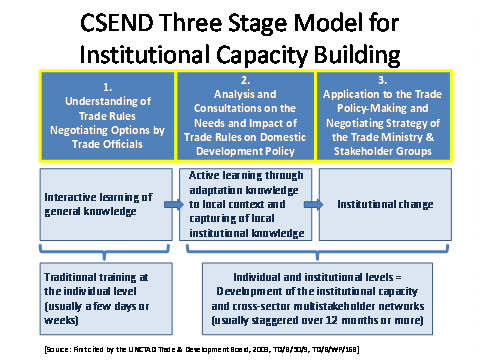
The learning architecture which bridges the individual training on trade rules to upgrade trade institutional capacities: Three stages model of CSEND (published in Capacity Development, 2003, Note by the UNCTAD Secretariat, Trade and Development Board (TD/B/50/9, TD/B/WP/168)